We don’t sell or resell software
No licenses, no seats, and no commission on anything we recommend. Where a paid tool is the right answer, you buy it and own the account.
 CircuIQ
About
An operations and automation consulting practice for service businesses — trades, cleaning, personal services, creators, professional services, pet services. The kind of business where the paperwork follows the work, and usually falls behind it.
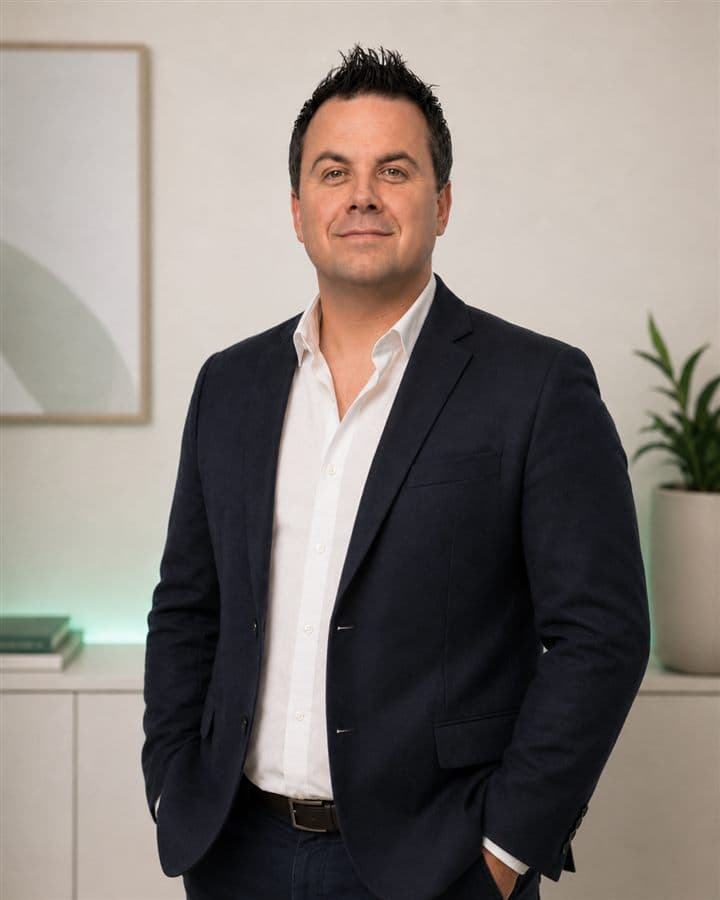
Who you’re dealing with
Founder & CEO
Twenty years in accounting, starting as a clerk and working up to controller, at companies ranging from the Fortune 500 down to shops with four people on the payroll. I've held roles in operations, HR, and IT along the way too, which is mostly how I learned that the thing breaking in accounting usually started somewhere upstream of it.
The same pattern showed up at every one of them. I'd start a job and find that about 30 of the 40 hours in the week were repetitive — the same information keyed in twice, the same reconciliation rebuilt by hand, the same month-end report assembled from scratch again. So I'd spend the first stretch building a process that took those 30 hours off the table. What's left is the 10 hours that genuinely needed an accountant, plus 30 hours to go build the next thing.
That's still the whole job as far as I'm concerned. Your bookkeeper should be working exceptions — the judgment calls that need a good person on them — instead of re-entering basic information over and over. And you should be spending your week on the work you started the business to do.
The last four of those years I spent auditing medical device quality systems against ISO 13485, which sounds unrelated to a lawn care company and isn't. Auditing a quality system is one long comparison between what a company says its process is, what its people actually do, and what it can prove — and everything worth finding sits in the gaps between those three. In that industry, a process nobody wrote down doesn't count as a process at all. I won't hold you to a medical device standard, but it is where the habit comes from: map the work as it actually runs before changing any of it, and don't call it finished until somebody other than me can run it from the documentation.
I run this practice myself. The person on your discovery call is the person who sits through the audit sessions, writes the report, and builds whatever you decide to build.
Every company I worked for could afford to hire someone like me. The businesses that need it most can't, so they get quietly told that consultants aren't for them — and the owner ends up doing data entry at nine at night. A small business isn't a scaled-down large one, but the systems thinking is the same, and there's no good reason it should only be available above a certain revenue line.
Automation gets sold as a software problem, and right now the answer to everything is AI. I don't think it is. Most of what eats your week isn't difficult — it's just undefined, and a clear repeatable process fixes it permanently, cheaply, and in a form you can hand to a new hire. I use AI where it genuinely earns its place and a plain process everywhere else. The goal is fewer moving parts, not more impressive ones.
I learned in high school that there's no such thing as a free lunch. If someone runs your diagnosis for free, they're being paid by whatever they recommend at the end of it. Charging for the audit is how I stay out of that. It means I can tell you the process is fine, or that the fix costs more than the problem, or that you should take the findings and have somebody else build it — and the report is yours either way.
The engagements that work start with an owner who knows something is wrong but can't put a finger on exactly what. It takes some humility to say that out loud, and a willingness to change how the work gets done once it's named. That part I can't supply.
You'll be dealing with me directly for the length of an engagement, so it's fair to know who that is. Music is on for most of the working day, apart from calls — rock, country, pop, R&B, rap, whatever the day calls for — and live whenever I can get to it. The other fixture is the walk: I'm out on Riverside most days, and the Fitbit has more say over my evenings than it probably should.
Weekends go outdoors when I can manage it — kayaking with my daughter, hiking, camping, some fishing — and if I'm home there's usually something on the smoker, which is twelve hours of work you can't hurry. I'll watch or play just about any sport you put in front of me. Most of what I enjoy takes a while and rewards turning up for it, which is roughly how I approach the job as well.
Who this is for
Usually that person is the owner. Sometimes it’s a spouse, or the one admin everybody quietly depends on. If they took two weeks off, the invoicing would stop — and finding those single points of failure is most of what an audit does.
How it runs
Remote, and sized for owner-run teams.
Typically a handful to a few dozen people, where the process lives largely in one person’s head. Everything happens over scheduled calls and a shared portal — no site visits to pay for, and no time zone you have to be in.
How we work
Every business has a dozen things that could be improved. Building the wrong one first is the most common way an automation project ends up abandoned, so we measure before we touch anything.
Sometimes the honest finding is that a process is fine, or that the fix costs more than the problem. That is not a sentence you hear from anyone whose pay depends on what they recommend next.
Fixed scope, fixed fee, agreed in writing. Hourly billing puts the risk of a slow week on the client, and open-ended engagements are how a small project becomes a large invoice.
An automation nobody understands is a liability, and one only the consultant can change is worse. Everything we touch leaves a written process the team can run without us.
What we don't do
Being specific about what we’re not saves everyone a call.
No licenses, no seats, and no commission on anything we recommend. Where a paid tool is the right answer, you buy it and own the account.
We don’t keep your books or file your taxes. We fix the operational process that feeds whoever does.
Every engagement is a fixed fee agreed before it starts. If the work takes longer than expected, that’s our problem.
Start with a conversation
A free call. We’ll tell you whether an audit would show you anything you don’t already know — and if it wouldn’t, we’ll say so.
Book a discovery call