Your own portal
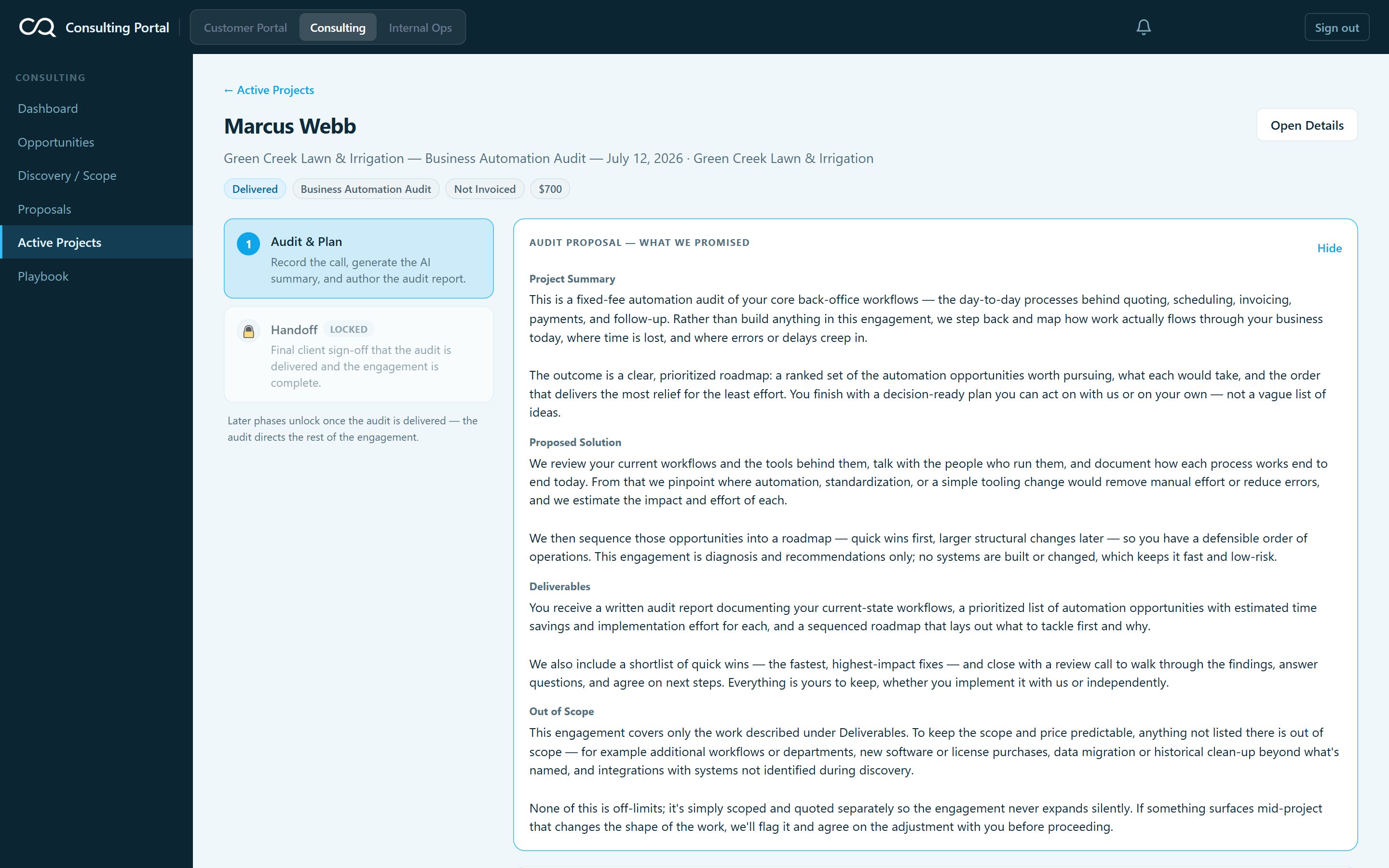
You get a login, not a folder of email attachments. Everything for the engagement lives in one place: what's outstanding, what's been agreed, and what's been delivered.
 CircuIQ
The platform
We built our own portal to run engagements through, because doing it over email means paperwork goes missing and nobody can reconstruct what was agreed. There’s nothing here to buy — it comes with the engagement.
See it run
A screen recording of the portal doing an actual job — not a mock-up, and not a slideshow. It runs about a minute, narrated, with the same words captioned on screen.
A contractor's W-9 arrives, gets read, gets checked against what they already told us, and gets verified — without anyone re-typing it.
The TIN match response is simulated in this recording. Everything else on screen — the upload, the extraction, the field comparison, and the records it writes — is the software running. Live engagements call the Tax1099 service.
What you get access to
These map one-to-one onto the nine steps. This is the engagement portal the consulting work runs through, not a separate software subscription you buy.
You get a login, not a folder of email attachments. Everything for the engagement lives in one place: what's outstanding, what's been agreed, and what's been delivered.
The short forms we send before a call, and the ones that collect detail during a build, are links rather than attachments — so nothing depends on finding the right email thread.
The proposal and the build scope are signed electronically and stored against the engagement. Both record who signed and when.
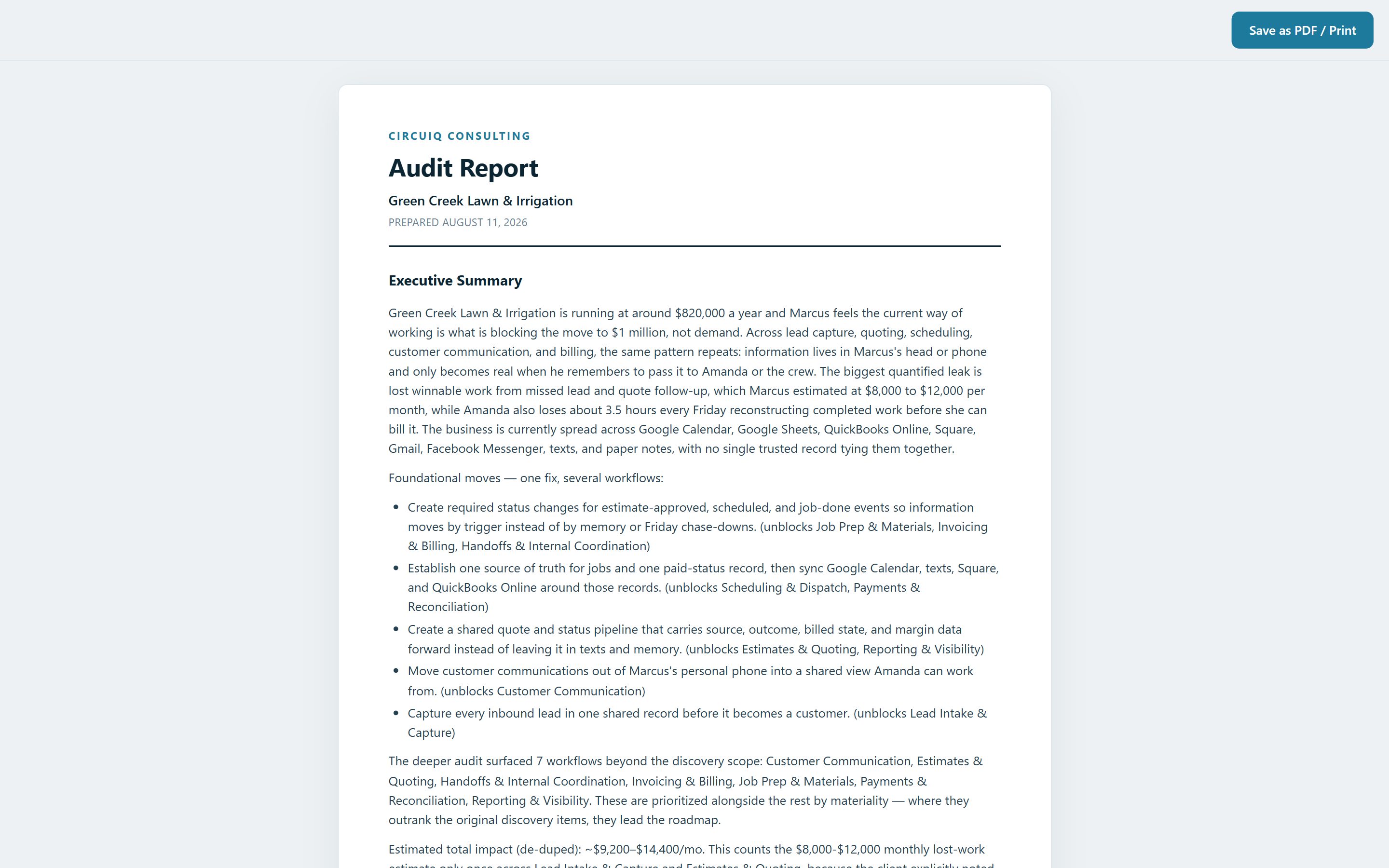
Findings are written up per workflow and delivered as a document you can read, share, and act on — with the ranking and reasoning attached, not just a list.
Build steps carry their own acceptance. You confirm each one, so 'done' is something you agreed rather than something we declared.
SOPs and automation documentation are produced as part of the work and handed over at the end. You keep them.
What it looks like
Two screens from a real engagement, using our own test client’s data.
Controls and records
Most disputes in consulting are about what was agreed, not about the work. These are the records that settle it.
Stage changes, approvals, signatures, sends, and deliveries are logged with a timestamp and an actor. If you ever need to answer who agreed to what and when, the record exists.
Every client-facing page — intake, scheduling, proposals, reports, sign-offs — is reached through a single-purpose, unguessable link tied to your engagement.
Automations we build run on your accounts and your subscriptions. Nothing is held inside a system only we can access, and nothing stops working if you stop working with us.
The platform surfaces decisions; it doesn't make them. Approvals, scope changes, and deliveries all wait on a human.
About QuickBooks
A lot of the businesses we work with run QuickBooks, and plenty of what we fix ends up feeding it more cleanly — bills arriving coded, receipts attached to jobs, month-end stopping being an excavation.
But the work is about how information moves through the business, not about one piece of accounting software. If you’re on something else, or on spreadsheets, none of this changes.
To be clear
We don’t sell software.
There’s no licence, no seat count, and no commission on any tool we recommend. The portal exists so the consulting work is well-run — that’s all.
Start with a conversation
A free call to map where the work gets stuck, and an honest answer on whether an audit would tell you anything new.
Book a discovery call